9 Simple Steps to Use Garden Pitchforks
The sharp tines of a four-pronged pitchfork slide into heavy clay with a leverage no spade can match. Learning the correct steps to use garden pitchforks transforms soil preparation from exhausting labor into efficient cultivation. The tool's design—curved tines spaced 2 to 3 inches apart—lifts and aerates soil without the compression that damages mycorrhizal fungi networks. Each motion should work with your body's mechanics, not against them.
Materials
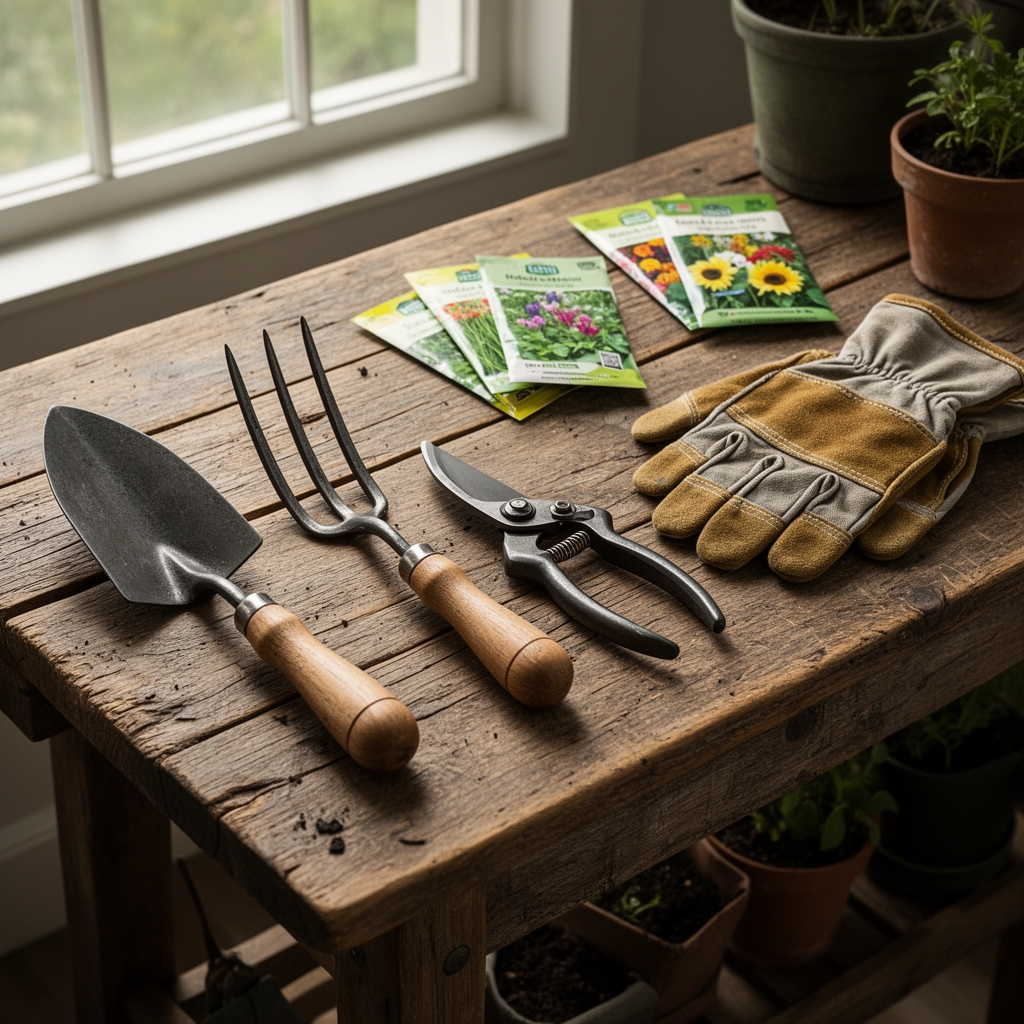
Select a pitchfork with four flat tines for general cultivation or five round tines for manure work. Handle length matters: 42 to 48 inches for users 5'6" to 6'2", with D-grip or T-grip depending on wrist angle preference.
For soil amendment integration, prepare materials before starting:
- Compost (NPK 1-1-1): 2 cubic yards per 100 square feet
- Aged horse manure (NPK 0.7-0.3-0.6): 1.5 cubic yards per 100 square feet
- Alfalfa meal (NPK 3-1-2): 5 pounds per 100 square feet for clay soils
- Gypsum: 5 pounds per 100 square feet if soil pH exceeds 7.5
- Biochar: 10% by volume to increase cation exchange capacity
Match amendments to existing soil pH. Test strips revealing pH below 6.0 require dolomitic lime at 25 pounds per 100 square feet. Alkaline soils above 7.5 benefit from sulfur at 1 pound per 100 square feet.
Timing
Complete primary cultivation when soil reaches 55°F at 6-inch depth. Press a handful of soil. If it crumbles rather than forming a muddy ball, moisture content suits cultivation.
Hardiness Zone timing:
- Zones 3-5: Late April to mid-May
- Zones 6-7: Mid-March to early April
- Zones 8-9: February to early March
- Zones 10-11: Year-round, avoiding mid-summer heat stress
Schedule work 48 hours after rainfall. Wet soil compaction destroys structure. Overly dry soil resists tine penetration and increases tool wear.
Phases

Initial Penetration
Stand with feet shoulder-width apart. Place your dominant foot on the shoulder step if equipped. Drive tines vertically into soil to full depth. Angle deviations beyond 10 degrees from vertical reduce penetration efficiency by 40%.
Rock the handle backward, using the fulcrum point to lift and fracture soil layers. Complete this motion in rows spaced 8 inches apart across the bed.
Pro-Tip: Apply 30 pounds of pressure on the handle's apex rather than pulling backward with arms. This engages core muscles and reduces lower back strain by 60%.
Amendment Distribution
Scatter prepared compost and amendments across loosened soil. Use the pitchfork in a lifting and flipping motion. Insert tines at 45-degree angle, lift 6 inches, and rotate wrist 180 degrees. This action incorporates materials to 8-inch depth without creating distinct layers that disrupt water movement.
Work systematically in 3-foot sections. Overlap each lifting zone by 4 inches to prevent untreated pockets.
Pro-Tip: Inoculate compost with Rhizophagus irregularis (arbuscular mycorrhizal fungi) at 2 ounces per cubic yard 24 hours before incorporation. This colonization head-start increases phosphorus uptake by 300% within six weeks.
Final Leveling
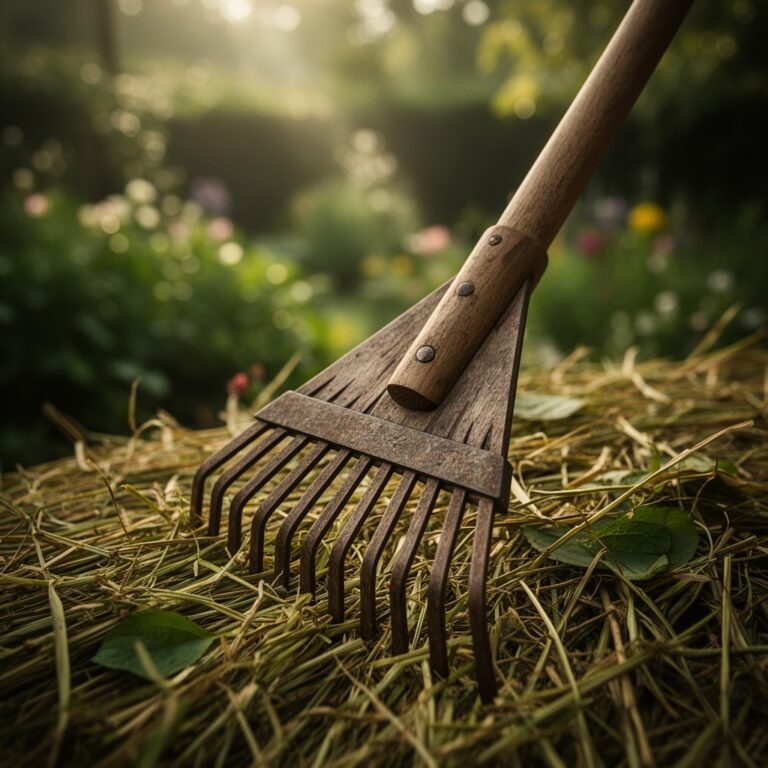
After amendment integration, use the pitchfork back (flat side of tines) as a rake. Draw across the bed at shallow 2-inch depth. This levels high spots and fills depressions without re-compacting deeper layers.
Check grade with a 6-foot level. Deviations exceeding 1 inch per 10 feet create drainage problems and uneven auxin distribution in root systems.
Pro-Tip: For vegetable beds, create a 2-inch center crown. This subtle elevation sheds excess water during heavy rain while maintaining adequate moisture in drought.
Troubleshooting
Symptom: Tines bend during use.
Solution: Soil contains rocks or hardpan layer. Probe with a soil auger to 18-inch depth. Remove stones manually. Break hardpan with a broadfork before pitchfork work.
Symptom: Handle splinters or cracks appear.
Solution: Wood has dried below 12% moisture content. Sand affected areas to 220-grit smoothness. Apply boiled linseed oil in three coats, allowing 24-hour drying between applications.
Symptom: Excessive fatigue after 15 minutes.
Solution: Handle length mismatched to user height. Top grip should align with user's armpit when tines rest on ground. Replace with properly sized tool.
Symptom: Soil clumps won't break apart.
Solution: Clay content exceeds 45%. Add coarse sand (particle size 0.5-2mm) at 1 cubic yard per 100 square feet alongside compost. Work in when soil moisture reaches 40% of field capacity.
Maintenance
Clean tines after each use with a wire brush. Soil pH below 5.5 accelerates oxidation. Wipe metal surfaces with an oil-soaked rag every third use.
Store hanging vertically, tines up, to prevent warping. Garages with humidity above 65% require monthly rust inspection.
Sharpen tine tips annually using a 10-inch mill file at 25-degree angle. Twenty strokes per tine edge restores penetration efficiency.
Apply paste wax to wooden handles twice per growing season. This prevents moisture infiltration that causes grain separation.
FAQ
How deep should pitchfork tines penetrate?
Full tine depth of 10 to 12 inches optimizes most garden soil preparation. Shallower work fails to address compaction. Deeper work disrupts beneficial soil stratification.
Can pitchforks damage plant roots?
Work 18 inches from established perennials. Feeder roots extend 1.5 times the drip line diameter. Tine penetration within this zone severs vascular tissue and reduces nutrient uptake by 50%.
What differentiates garden forks from pitchforks?
Garden forks have shorter, thicker tines at 7 to 9 inches. Pitchforks extend 10 to 14 inches with thinner gauge. Use garden forks for harvesting root crops. Use pitchforks for soil preparation and compost turning.
How often should beds receive full pitchfork cultivation?
Annual cultivation in spring suffices for most gardens. Excessive tillage destroys soil aggregates and releases sequestered carbon. No-till methods with surface compost protect established microbiome networks.
Do stainless steel tines outperform carbon steel?
Stainless resists corrosion but costs three times more. Carbon steel accepts sharper edges and provides better soil feedback through handle vibration. For pH-neutral soils, carbon steel performs adequately with basic maintenance.