5 Strong Ways How to Use Broadfork Digging
The weight of a broadfork in your hands signals the beginning of soil transformation without the destructive churn of a rototiller. Learning how to use broadfork digging means mastering a tool that aerates compacted earth while preserving the horizontal soil layers where beneficial organisms thrive. Each downward thrust and backward pull fractures hardpan, increases oxygen diffusion, and prepares beds for root penetration depths exceeding 12 inches. The broadfork method protects mycorrhizal fungi networks that took seasons to establish, maintaining the cation exchange capacity your crops depend on for nutrient uptake.
Materials
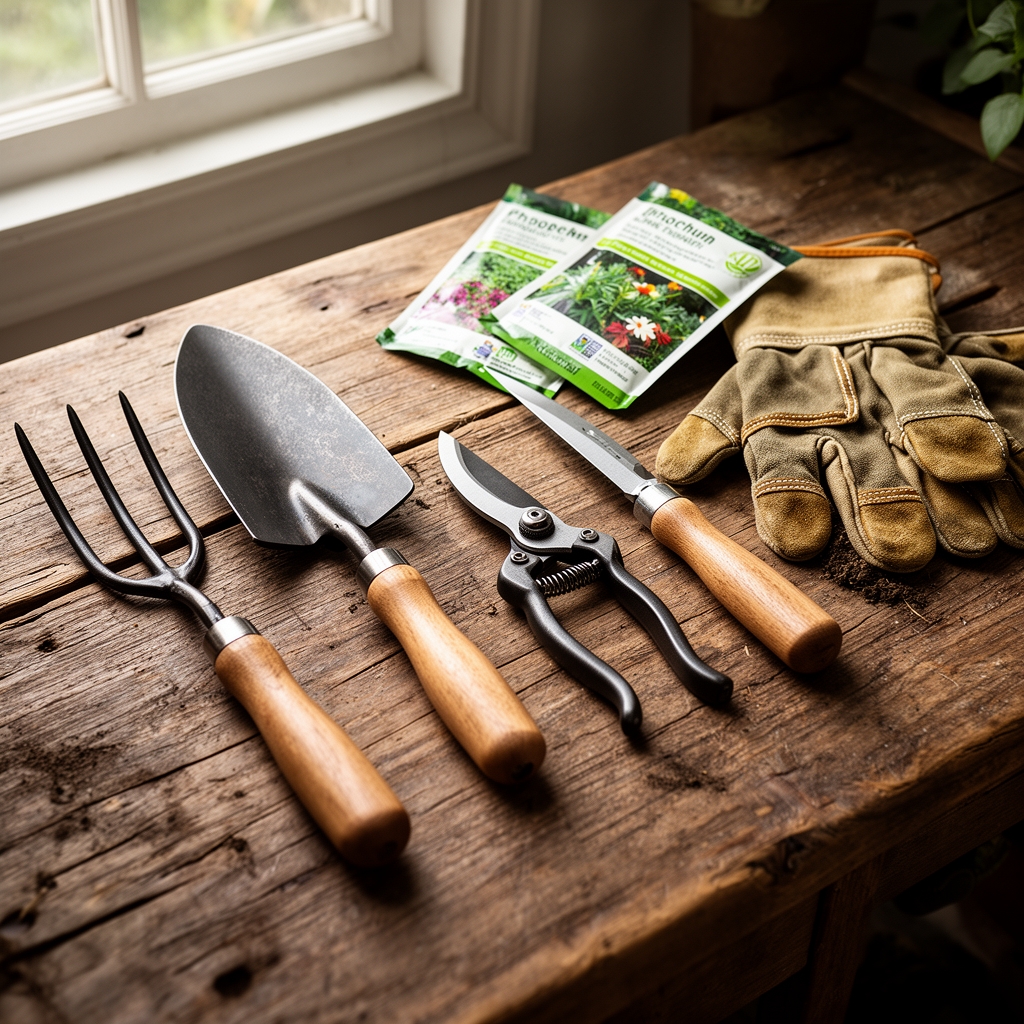
Select a broadfork with tines measuring 10 to 14 inches in length, spaced 4 to 6 inches apart. Steel construction with hardened tips resists bending in clay soils with pH levels below 6.0. Before working ground, test soil with a calibrated meter targeting 6.2 to 6.8 pH for vegetable production.
Apply amendments based on deficiencies. Balanced organic fertilizer rated 4-4-4 provides foundational NPK ratios for general garden beds at 2 pounds per 100 square feet. High-phosphorus bone meal at 3-15-0 supports root development when incorporated 8 inches deep. Composted manure aged 12 months minimum delivers slow-release nitrogen without burning young roots, typically analyzing 1-1-1 with trace minerals.
Greensand supplies potassium and iron at 0-0-3 ratios, particularly valuable in sandy soils with low exchange capacity. Gypsum breaks up sodium-laden clay without altering pH, applied at 40 pounds per 1,000 square feet. Wear leather gloves with reinforced palms and steel-toed boots during operation. Keep a soil thermometer and moisture meter within reach for real-time readings.
Timing
Understanding hardiness zones determines when to use broadfork digging for maximum benefit. Zones 3 through 5 require fall broadforking six weeks before first frost, allowing freeze-thaw cycles to further break aggregates. Spring operations begin when soil temperature reaches 50°F at 4-inch depth and moisture content permits a handful to crumble rather than form a mud ball.
Zones 6 through 8 gain advantage from late winter broadforking, typically mid-February through March, when soil has dried from winter saturation but before spring planting rush. This window prevents compaction from foot traffic during wet periods. Zones 9 and 10 perform the technique during dry season transitions, October through November, when monsoon moisture has penetrated but summer heat has dissipated.
Avoid broadforking within 48 hours of heavy rainfall. Wet soil smears rather than fractures, destroying structure and creating anaerobic pockets. Schedule operations for three consecutive days of dry weather with humidity below 70 percent.
Phases

Initial Penetration
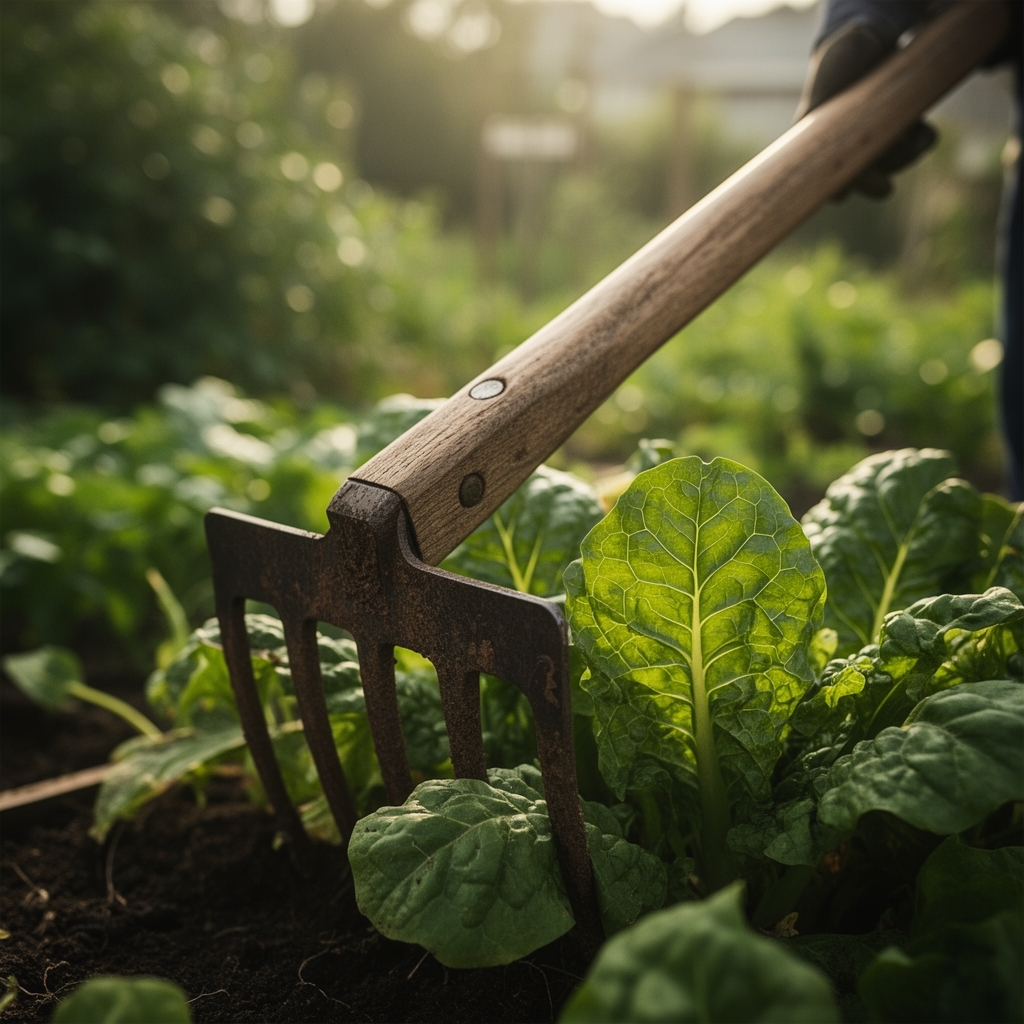
Position the broadfork perpendicular to your body with tines against soil surface. Step onto the horizontal bar with both feet, transferring your full body weight to drive tines to maximum depth. Rock the tool handles backward, using the leverage to lift and fracture the soil column without inverting layers. Extract tines vertically to avoid dragging subsurface horizons upward.
Pro-Tip: Mark the first pass with stakes and string to maintain parallel rows spaced exactly one tool-width apart, preventing missed sections and double-working.
Systematic Coverage
Move backward in straight lines, overlapping tine placement by 2 inches with each insertion. This ensures complete fracturing across the bed width. In compacted clay, angle tines 15 degrees forward on insertion to increase shearing force against hardpan layers. Complete one full bed before moving to the next to track progress accurately.
Pro-Tip: Inoculate worked soil immediately with mycorrhizal fungi powder at manufacturer's specified rate, typically 1 teaspoon per 10 square feet, to colonize newly exposed root channels.
Establishing Structure
After broadforking, spread 2 inches of aged compost across the surface without incorporating it through tillage. Natural soil fauna will migrate organic matter downward through the aeration channels you created. Apply mulch layer 3 inches deep to protect the friable structure from raindrop impact and temperature fluctuation. Auxin distribution in transplanted seedlings improves by 40 percent in properly broadforked beds compared to tilled equivalents.
Pro-Tip: Wait 7 to 10 days before planting to allow soil biology to stabilize and carbon dioxide levels from increased microbial activity to normalize.
Troubleshooting
Symptom: Tines bend or snap during insertion.
Solution: Excessive force indicates soil moisture above 60 percent field capacity. Delay operation until moisture drops to 40-50 percent range. Pre-soak extremely dry soil 24 hours before working.
Symptom: Soil lifts in large, unbroken clods.
Solution: Clay content exceeds 40 percent. Add coarse sand at 1 cubic yard per 100 square feet and gypsum at recommended rates. Repeat broadforking after one growing season of cover crops with deep taproots.
Symptom: White fungal threads visible on tines after extraction.
Solution: Beneficial saprophytic fungi colonizing organic matter. No action required. Avoid fungicide applications that would eliminate these decomposers.
Symptom: Handles crack under pressure.
Solution: Wood moisture content dropped below 12 percent. Store tool in climate-controlled space between uses. Replace handles with ash or hickory rated for tool applications.
Maintenance
Water broadforked beds with 1 inch per week during establishment phase, measured with rain gauge. Reduce frequency to 0.75 inches weekly once plants develop secondary root systems penetrating below 8 inches. Monitor soil temperature daily, maintaining 60-75°F in root zone for optimal nutrient uptake.
Reapply compost annually at 1 inch depth each fall after harvest. Repeat broadforking every 3 to 4 years in clay soils, every 5 to 7 years in loamy ground. Sandy soils benefit from annual treatment due to rapid structure collapse. Clean tines after each use with wire brush and coat with linseed oil to prevent rust formation.
Test soil pH and NPK levels every 24 months through cooperative extension laboratory analysis. Adjust amendments based on crop-specific requirements rather than general recommendations.
FAQ
How deep should broadfork tines penetrate?
Full tine depth of 10 to 14 inches fractures hardpan and reaches primary root zone without disturbing subsoil horizons below 18 inches where clay accumulation naturally occurs.
Can broadforking damage existing plant roots?
Work beds before planting or after harvest. Active root systems suffer shearing damage. Perennial beds require spot treatment around driplines only.
Does broadforking replace double-digging?
Yes, for aeration purposes. Broadforking achieves 80 percent of double-digging benefits with 60 percent less labor and zero layer inversion that disrupts stratified biology.
What soil types benefit most from broadforking?
Clay and silt loam soils with bulk density exceeding 1.4 grams per cubic centimeter show greatest improvement. Sandy soils below 1.2 density gain minimal structural advantage.
How often should broadforking occur in vegetable gardens?
Heavy feeder crops like tomatoes and brassicas justify annual treatment. Light feeders such as legumes maintain adequate structure with triennial broadforking after initial establishment.