10 Expert Tips How to Choose Indoor Grow Lights
The sodium lamp hums overhead, casting its amber haze across seedlings that stretch too far, reaching for what they cannot find. Indoor cultivation demands precision in spectral delivery, and learning how to choose indoor grow lights separates successful harvests from chlorotic failures. The spectrum you select will dictate photomorphogenesis, flowering initiation, and the fundamental architecture of every plant under your care. This guide provides ten evidence-based principles for matching light technology to your cultivation goals.
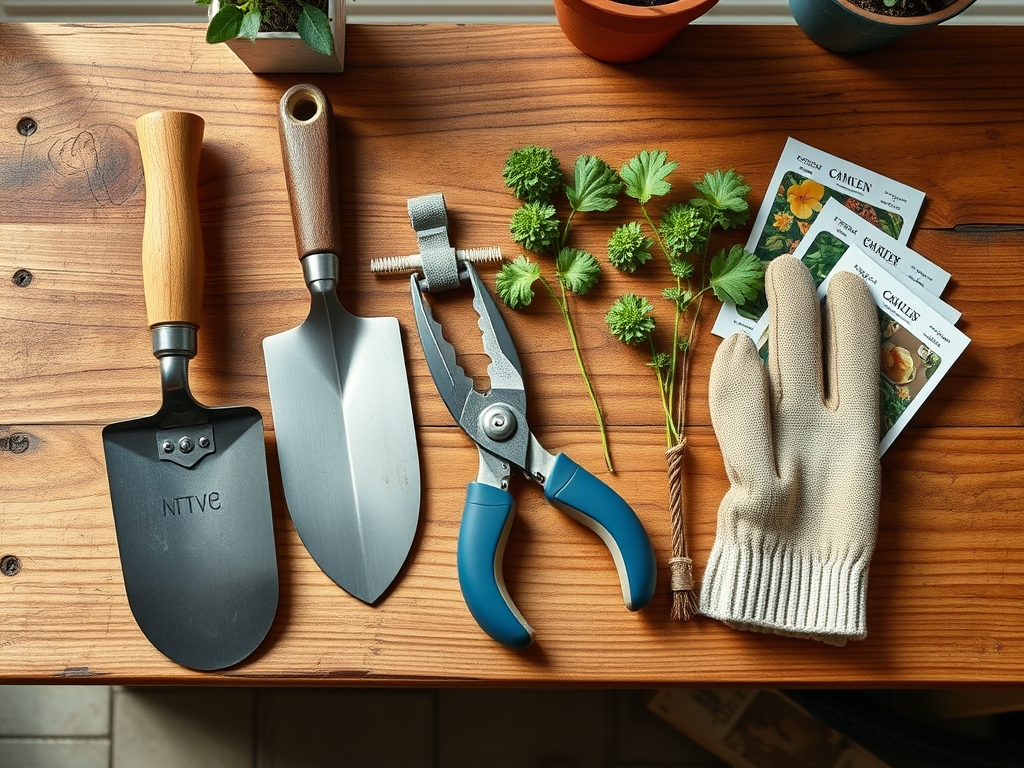
Materials
Selecting appropriate lighting requires understanding both the technology and its electrical demands. LED fixtures dominate modern indoor horticulture due to efficiency ratings between 2.5 and 3.0 μmol/J, though high-pressure sodium (HPS) systems remain viable for operations prioritizing initial capital savings over long-term energy costs.
For substrate preparation beneath these systems, maintain pH between 5.8 and 6.5 for soilless media, 6.0 to 7.0 for traditional potting mixes. A balanced organic amendment at 4-4-4 NPK ratio provides baseline nutrition, supplemented during flowering with 2-5-6 formulations to support reproductive growth without excessive vegetative extension. Cation exchange capacity in peat-based media should register above 100 meq/100g to buffer nutrient availability against irrigation frequency. Mycorrhizal fungi inoculation at transplant improves phosphorus uptake under intense lighting regimes, where demand can exceed 50 ppm in tissue analysis.
Timing
Indoor environments eliminate hardiness zone constraints, yet circadian rhythm management remains critical. Most fruiting plants require 12-16 hours of photoperiod during vegetative growth, reducing to 10-12 hours to trigger flowering in photoperiod-sensitive species.
Installation timing should account for electrical infrastructure upgrades. Circuits supporting 1000-watt HPS systems require dedicated 240-volt lines rated for continuous 5-amp draw with 20% overhead capacity. LED arrays reduce this demand proportionally, often operating on standard 120-volt household circuits. Plan electrical work 2-3 weeks before equipment arrival to avoid installation delays.
Seasonal considerations affect ambient temperature management. Winter installations reduce cooling demands, cutting HVAC expenses by 30-40% compared to summer starts. In USDA Zones 7 and above, summer installations require supplemental air conditioning to maintain canopy temperatures below 82°F under high-intensity discharge lighting.
Phases
Sowing and Early Vegetative
Seedlings require 200-400 μmol/m²/s PPFD (photosynthetic photon flux density) positioned 24-36 inches above growing tips. Blue spectrum dominance (400-500 nm) at this stage promotes compact internodal spacing and robust root development. T5 fluorescent fixtures or dedicated seedling LED panels provide appropriate intensity without overwhelming juvenile tissue.
Pro-Tip: Maintain leaf surface temperature at 72-76°F during this phase by measuring with an infrared thermometer, not ambient air temperature. Excessive radiant heat causes premature stomatal closure and impaired auxin distribution.
Transplanting and Rapid Growth
Increase PPFD to 400-700 μmol/m²/s as plants establish. Full-spectrum LEDs with 3:1 red-to-blue ratios accelerate vegetative expansion while maintaining structural integrity. Suspend fixtures 18-24 inches above canopy, adjusting daily to maintain consistent light intensity as plants ascend.
This phase demands NPK ratios favoring nitrogen, typically 3-1-2 formulations applied at 150-200 ppm nitrogen with each irrigation. Excess intensity manifests as leaf edge chlorosis despite adequate nutrition, indicating photoinhibition rather than deficiency.
Pro-Tip: Rotate containers 90 degrees every three days to counteract phototropic bending and ensure symmetrical canopy development.
Establishing and Flowering
Mature plants tolerate 700-1200 μmol/m²/s PPFD during reproductive phases. Red spectrum enhancement (600-700 nm) promotes floral initiation and essential oil synthesis in aromatic species. Reduce photoperiod to species-appropriate durations, typically 12 hours for day-neutral varieties, 10 hours for short-day obligates.
Maintain fixtures 12-18 inches above canopy tops, monitoring leaf surface temperature continuously. Radiant heat from HPS systems often requires 24-inch clearance to prevent heat stress.
Pro-Tip: Implement end-of-day far-red treatment (720-740 nm) for 15 minutes post-photoperiod to accelerate flowering by 7-10 days through phytochrome manipulation.
Troubleshooting
Symptom: Interveinal chlorosis in new growth despite adequate iron supplementation.
Solution: Light intensity exceeds photosystem capacity. Reduce PPFD by 20% or increase canopy distance by 6 inches. Confirm pH remains below 6.5, as alkaline conditions lock iron regardless of light quality.
Symptom: Excessive stem elongation with pale, thin leaves.
Solution: Insufficient blue spectrum or inadequate total intensity. Increase PPFD by 100-150 μmol/m²/s or switch to fixtures with enhanced blue output (440-460 nm peak).
Symptom: Leaf margins curling upward (tacoing).
Solution: Heat stress from insufficient canopy-to-fixture distance or inadequate ventilation. Increase clearance to 24 inches minimum, ensure airflow reaches 40-60 air exchanges per hour.
Symptom: Premature flowering in vegetative phase.
Solution: Light leak during dark period or photoperiod below 14 hours. Seal grow space completely, extend lighting duration to 18 hours.
Maintenance
Replace HPS bulbs after 10,000-12,000 operational hours as spectral output degrades 30% beyond this threshold. LED diodes maintain 90% output for 50,000 hours before requiring replacement.
Clean reflectors and lens covers monthly with isopropyl alcohol to maintain 95% light transmission. Dust accumulation reduces effective PPFD by 15-25% within 60 days in unfiltered environments.
Water to 20% runoff at each irrigation, measuring electrical conductivity in drainage to maintain 1.8-2.4 mS/cm. Values exceeding 3.0 mS/cm indicate salt accumulation requiring substrate flush with pH-balanced water at triple container volume.
Monitor daily light integral (DLI), targeting 30-40 mol/m²/day for fruiting crops, 15-25 mol/m²/day for foliage production. Calculate DLI by multiplying PPFD by photoperiod hours and conversion factor 0.0036.
FAQ
What wattage do I need per square foot?
Target 30-50 actual watts per square foot for LED systems, 50-80 watts for HPS. Efficacy matters more than wattage. A 240-watt LED at 2.7 μmol/J outperforms a 400-watt HPS at 1.7 μmol/J.
Can I use regular LED bulbs?
Standard household LEDs lack appropriate spectrum and intensity. Horticultural fixtures provide PAR wavelengths (400-700 nm) at densities 10-20 times greater than residential lighting.
How close should lights hang?
LED: 12-24 inches depending on wattage. HPS: 18-36 inches. Measure PPFD with quantum sensor rather than relying on distance alone.
Do I need UV or far-red?
UV-B (280-315 nm) increases secondary metabolite production but damages tissue above 1 hour daily. Far-red accelerates flowering and increases canopy penetration. Both remain optional for basic cultivation.
How long do grow lights last?
Quality LEDs function 50,000+ hours. HPS bulbs require replacement every 12-18 months of continuous use to maintain spectral integrity.